

The Pragmatic Engineer
 1:28:33
Maggie Appleton on Design Engineering: Paper, Jigs, and What Agents Still Can't See
Maggie Appleton is a staff research engineer at GitHub Next, where she prototypes ways software engineers might work with AI agents. She has been an illustrator, the first designer at the AI startup E
 1:36:37
Matt Pocock on Grilling Your Agent: Why Old Software Fundamentals Matter More with AI
Matt Pocock built Total TypeScript into a multi-million-dollar course business. More recently he created a set of AI agent skills, including "grill me" and "wayfinder," that spread quickly among devel
 1:14:23
Building Codex: Tibo Sottiaux on Rust, Open Source, Harnesses, and Cheap Code Changes
Tibo Sottiaux was on the team when Codex started and has led the broader Codex team since. On the Pragmatic Engineer Podcast, the host asked how OpenAI's coding agent was built and how it keeps changi
 1:53:59
Casey Muratori on Why Software Performance Matters and Why the Industry Keeps Ignoring It
Casey Muratori is a programmer and game developer, founder of Molly Rocket, and author of the Substack Computer, Enhance, which focuses almost entirely on software performance. His argument, repeated
 1:32:31
From Chrome DevTools to Loop Engineering: Addy Osmani on Understanding How Things Work
Addy Osmani spent 14 years at Google, most of it on Chrome, where the work included Chrome DevTools and Core Web Vitals. The role grew from developer relations engineer to director of engineering, and
 1:26:23
Charity Majors on Shipping Code You Haven't Read and Why Both AI Camps Are Right
Charity Majors, co-founder of Honeycomb and co-author of Observability Engineering, describes herself in this conversation as someone who was skeptical of AI for software development in 2025 and chang
 1:24:54
Formal Methods in the Age of AI: Hillel Wayne on Engineering, TLA+, and What Machines Still Can't Specify
A popular theory holds that AI will finally push formal verification into the mainstream: if machines write most of the code, humans will need mathematical proof that it is correct. In this episode of
 55:35
55:35From Napkin Math to turbopuffer: Simon Eskildsen on First Principles, Simple Software, and Honest Fundraising
At AI Engineer's World Fair in San Francisco, Gergely Orosz interviewed Simon Eskildsen, co-founder and CEO of turbopuffer, a search and vector database built on object storage. The conversation cover
 1:33:12
Dex Horthy on Context Engineering, and Why HumanLayer Shut Down Its Own Lights-Off Software Factory
Dex Horthy, CEO and cofounder of HumanLayer, is credited with coining the term "context engineering." His team also tried running a software factory in which agents shipped code that no human read. Th
 1:19:15
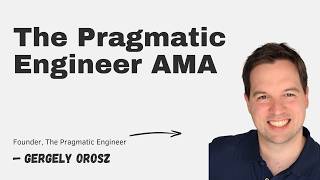
The Pragmatic Engineer AMA: Gergely Orosz on AI, Hiring, Big Tech, and Running an Independent Newsletter
In this reversed episode of the Pragmatic Engineer podcast, Gergely Orosz answers questions from subscribers instead of asking them. The questions are read by Volodymyr Giginiak ("Giggs"), CTO and cof
 2:28:43
Kent Beck on Trust, Stupid Ideas, and Why Nobody Knows the Playbook Yet
Kent Beck created Extreme Programming, pioneered test-driven development, co-created JUnit, and signed the Agile Manifesto. In this long conversation on the Pragmatic Engineer podcast, recorded in per
 1:29:57
NeetCode on Why Learning Hard Things Still Matters When AI Writes the Code
Navdeep Singh, known to many as NeetCode, built one of the most widely used coding-interview preparation platforms. He worked briefly at Amazon and then at Google before going full-time on his own bus
 52:08
52:08Slow Down to Speed Up: Gergely Orosz on What AI Is Actually Doing to Software Engineering
In this keynote at Craft Conference 2026 in Budapest, Gergely Orosz, author of The Pragmatic Engineer, asked whether AI coding agents are really making teams and companies more productive. Orosz relie
 1:15:37
Roll Forward, Toggle Often: Robert Erez on How Teams Actually Ship Software
Robert Erez is a principal engineer at Octopus Deploy and has worked on CI/CD and deployment tooling for more than a decade. On The Pragmatic Engineer, he and the host, a former teammate from Skype, d
 2:52:10
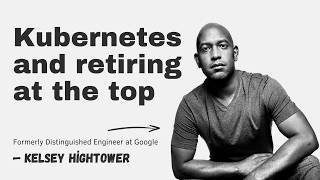
Kelsey Hightower on Kubernetes, Career Impact, and Retiring at the Top
Kelsey Hightower started in tech installing DSL modems door-to-door at 19. He later became a Distinguished Engineer at Google and one of the best-known voices in the Kubernetes community, and he retir
 1:21:02
Dax Raad on Building OpenCode: Fast Growth, Slow Thinking, and Why AI Hasn't Made the Hard Parts Easier
Dax Raad is a co-founder of OpenCode, an open source AI coding harness that, by the numbers given in this conversation, grew from about 650,000 monthly active users in December to somewhere near 8 mil
 1:05:52
Why Rust Feels Different: Alice Ryhl on Reliability, Ownership, and How the Language Is Governed
Rust has a reputation as one of the most admired programming languages and also one of the hardest to learn. In this episode of The Pragmatic Engineer Podcast, Alice Ryhl talks through what makes it d
 1:16:02
Anders Hejlsberg on Turbo Pascal, C#, TypeScript, and Programming Languages in the Age of AI
Anders Hejlsberg created Turbo Pascal, Delphi, C#, and TypeScript. In this conversation on The Pragmatic Engineer podcast, he traces that path from a high-school minicomputer in Copenhagen to the Type
 1:33:57
Building Pi: Mario Zechner and Armin Ronacher on Self-Modifying Agents, Lost Friction, and Why Engineering Needs to Slow Down
Mario Zechner built Pi, a minimalist coding agent that users extend by asking it to modify itself. It is also the agent core underneath Peter Steinberger's OpenClaw. Armin Ronacher, the creator of Fla
 1:25:50
Martin Kleppmann on Designing Data-Intensive Applications, the Cloud, and Research After Industry
Martin Kleppmann wrote Designing Data-Intensive Applications (DDIA), a standard reference for engineers who build large back-end systems. Nine years after the first edition, a heavily updated second e